Is malt vinegar gluten-free? A UK guide to malt vinegar and barley malt extract
Malt vinegar is made from barley. When it's suitable on a UK gluten-free diet, what the label tells you, and how it shows up in crisps, chips and pickles.
Malt vinegar is a British staple: on chips, in pickled onions, in brown sauce and in salt and vinegar crisps. It’s also made from barley, which is one of the cereals people with coeliac disease have to avoid (NHS). So is it gluten-free? The answer depends on the label. Coeliac UK has changed its policy on barley malt vinegar, so older advice you read online may be out of date.
The short answer
Malt vinegar is not automatically gluten-free. Coeliac UK’s current guidance (gluten-free checklist, May 2024) puts barley malt vinegar in its “need to check” column. The checklist reflects Coeliac UK’s current position following an earlier change in its policy on barley malt vinegar.
Coeliac UK explains that barley malt vinegar is made by fermentation, which breaks the gluten protein in barley into smaller fragments, and that foods containing small amounts of it can be eaten by people with coeliac disease if they contain 20 parts per million (ppm) of gluten or less. The way to tell is the label: products made with barley malt vinegar need to be labelled gluten-free to show they meet that level.
In practice:
- Malt vinegar labelled “gluten-free” (or carrying Coeliac UK’s Crossed Grain symbol): suitable.
- Malt vinegar with no gluten-free claim: you can’t tell from the bottle, so leave it.
Which vinegars are gluten-free?
Most vinegars aren’t made from gluten-containing cereals at all. Coeliac UK’s checklist lists these as gluten-free:
- balsamic vinegar
- cider vinegar
- sherry vinegar
- spirit vinegar
- white wine and red wine vinegar
Barley malt vinegar is the one to check. Be careful with names: “distilled malt vinegar” is still made from malted barley and isn’t on Coeliac UK’s gluten-free list by that name, so treat it the same way and look for a gluten-free claim.
Why “gluten-free” and “barley” can appear on the same bottle
This confuses a lot of people. Two different rules are at work:
- Allergen labelling. UK law requires cereals containing gluten to be named and emphasised in the ingredients list, usually in bold, however small the amount. So barley malt vinegar will always show barley.
- The gluten-free claim. A food can only be labelled gluten-free if it contains no more than 20 mg/kg (20 ppm) of gluten as sold.
So a bottle that says barley in bold and “gluten-free” isn’t contradicting itself: the barley has to be declared, and the claim tells you the finished product has been shown to meet the gluten-free limit. Without the claim, the ingredients list alone can’t tell you the gluten level.
Coeliac disease and barley allergy are different. The gluten-free claim is about suitability for coeliac disease. If you or your child has a barley allergy, a gluten-free label doesn’t make a barley ingredient safe: barley is still an allergen, which is why it stays in bold. Follow the advice of your doctor or dietitian.
Our guide to gluten-free vs “may contain” labelling explains UK labels in more detail.
Barley malt extract works the same way
Barley malt extract is a different ingredient from malt vinegar: it’s a sweet, malty flavouring added in small amounts to things like breakfast cereals. The principle is the same, though. Coeliac UK lists breakfast cereals that contain barley malt extract as “need to check”, and products made with ingredients like these need a gluten-free label to show they contain 20 ppm or less.
So if you see barley malt extract in bold:
- with a gluten-free claim on the pack: suitable;
- without one: don’t rely on it.
Don’t confuse either of these with malt itself or malted drinks. Coeliac UK lists malted milk drinks and barley squash as not gluten-free. And beer, which is brewed from barley malt, is a separate topic: see our gluten-free beer guide.
Some cereal-derived ingredients have the gluten removed during processing and don’t need checking: Coeliac UK lists glucose syrup from wheat or barley, wheat-based maltodextrins and distilled ingredients such as spirits as safe. Barley malt vinegar and barley malt extract are not on that list.
Where malt vinegar turns up
Coeliac UK’s checklist lists all of these as “need to check”:
- Crisps. Salt and vinegar flavours can use barley malt vinegar in the seasoning. Look for a gluten-free claim and for barley or wheat in bold.
- Pickles. Vegetables pickled in spirit vinegar are on the gluten-free list. Vegetables pickled in barley malt vinegar need checking, as do pickles and chutneys generally.
- Sauces and condiments. Brown sauce, salad cream, dressings, mayonnaise and jarred sauces can contain malt vinegar or other gluten sources. Gravy and stock have their own guide.
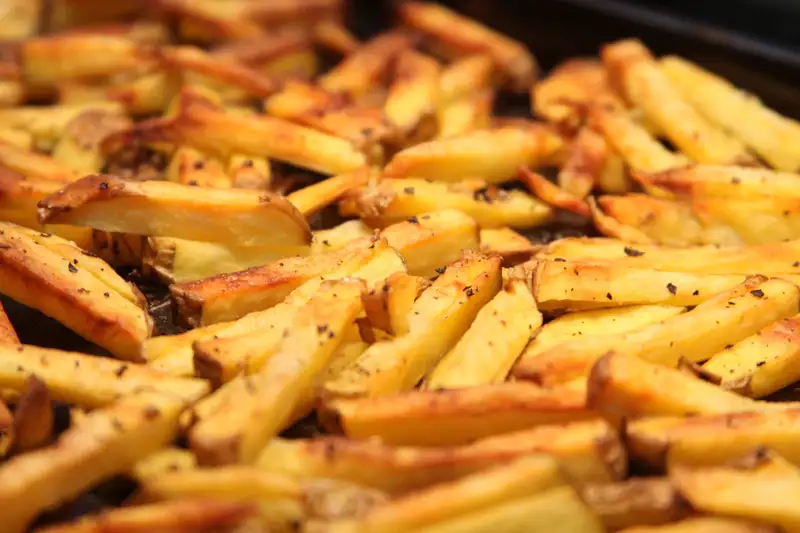
- Shop-bought chips. Oven and frozen chips are “need to check”, because coatings and seasonings vary.
The habit is the same each time: check the current pack, even for something you’ve bought before, because recipes change.
Chip shops and takeaways
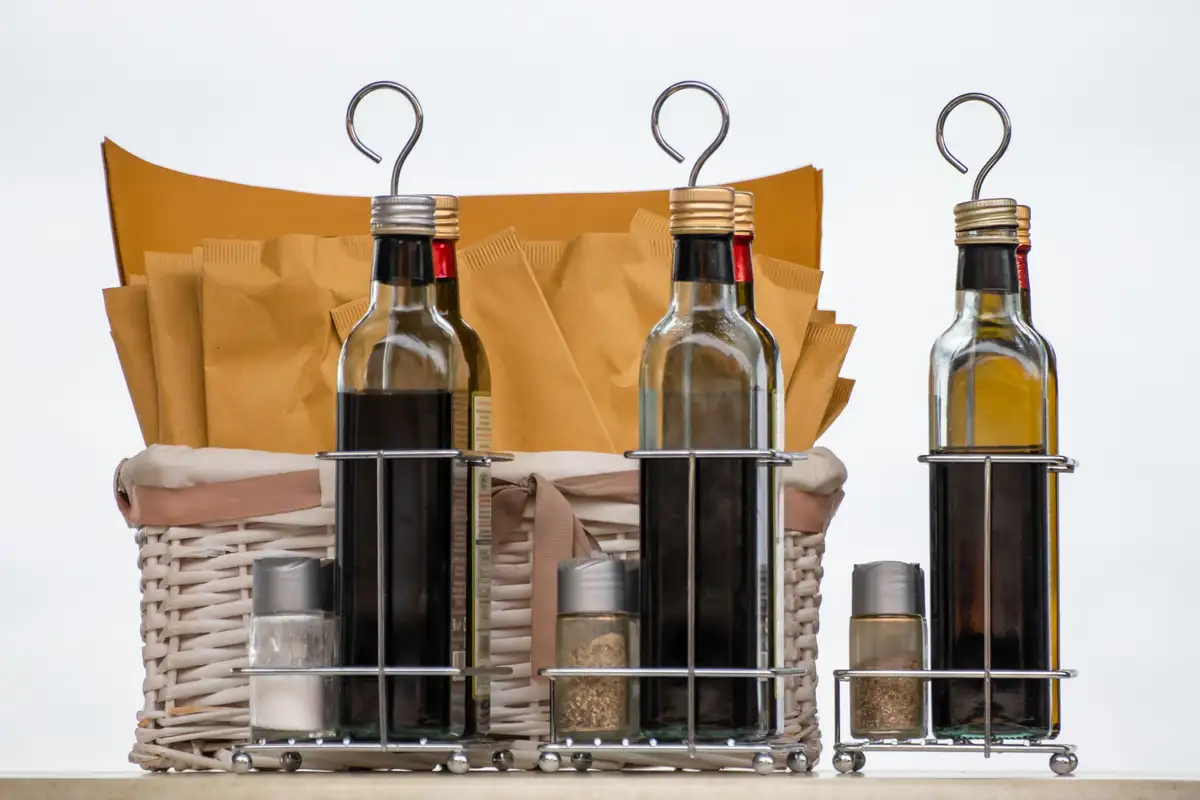
At a chip shop, the vinegar is only part of the question. Ask what’s in the bottle on the counter, and whether a gluten-free option is available. If you aren’t sure, bring your own gluten-free vinegar.
The bigger risk is usually the fryer. Coeliac UK advises avoiding chips cooked in the same oil as battered fish, and warns that oil is often rotated, so “separate” chip oil may have been used for battered food before. Some shops have a dedicated gluten-free fryer or gluten-free nights, so it’s worth asking. Our chips guide covers fryers and shop-bought chips in more detail. Our eating out guide covers what to ask and your rights to allergen information.
An example label (checked 7 October 2026)
As an example of what a gluten-free malt vinegar label looks like: at the time of checking (7 October 2026), Sarson’s said its Brown Malt and Distilled Malt Vinegars contain less than 20 ppm gluten, are certified gluten-free by Coeliac UK, and still show barley in bold as an allergen (Sarson’s FAQs). Sarson’s also said some of its other products, including its pickling vinegars, were not yet certified, and that new labels were still being rolled out. Recipes and labels can change, so always check the current pack, whatever brand you buy.
We mention this product only as an example of how a gluten-free malt vinegar was labelled when we checked. It isn’t a lasting guarantee, we haven’t tested it, and we aren’t paid to mention it.
Quick checklist
- Is it spirit, cider, wine, sherry or balsamic vinegar? Gluten-free.
- Is it malt vinegar (including distilled malt vinegar)? Only if it’s labelled gluten-free.
- Does a product list barley malt vinegar or barley malt extract? Only if the product is labelled gluten-free.
- Eating out? Ask about the vinegar and the fryer.
For more everyday shopping tips, see our UK supermarket guide.
Frequently asked questions
Is malt vinegar gluten-free?
Not automatically. Malt vinegar is made from barley, and Coeliac UK lists barley malt vinegar as a 'need to check' food. Under Coeliac UK's current guidance, it is suitable for people with coeliac disease only when it is labelled gluten-free, which means it contains no more than 20 parts per million (20 mg/kg) of gluten.
Why does a gluten-free malt vinegar still show barley in bold?
UK allergen labelling rules require barley to be emphasised in the ingredients list whenever it is used, however little. A product can carry a gluten-free claim and still list barley in bold, because the claim is about the gluten level in the finished food.
Is barley malt extract gluten-free?
Only if the product it's in is labelled gluten-free. Coeliac UK says foods with small amounts of barley malt extract can be eaten if they contain 20 ppm of gluten or less, but you can't tell that from the ingredients list alone, so look for the gluten-free claim.
Which vinegars are gluten-free?
Coeliac UK's gluten-free checklist lists balsamic, cider, sherry, spirit, white wine and red wine vinegars as gluten-free. Barley malt vinegar is the one that needs checking.
Are salt and vinegar crisps gluten-free?
Some are and some aren't. Coeliac UK lists crisps as a 'need to check' food, and vinegar flavourings can be made with barley malt vinegar. Check the pack for a gluten-free claim and for barley or wheat in bold.
Sources
- Gluten free checklist (May 2024), Coeliac UK. Accessed 7 October 2026.
- Coeliac disease and the gluten free diet (healthcare professional presentation), Coeliac UK. Accessed 7 October 2026.
- How to read food labels, Coeliac UK. Accessed 7 October 2026.
- Safe gluten free options for takeaways, Coeliac UK. Accessed 7 October 2026.
- Commission Implementing Regulation (EU) No 828/2014 (as retained in UK law), legislation.gov.uk. Accessed 7 October 2026.
- Coeliac disease: treatment, NHS. Accessed 7 October 2026.
- Gluten free FAQs, Sarson's (Mizkan). Accessed 7 October 2026.
The Coeliac Everyday newsletter
Gluten-free first: new recipes, supermarket alternatives, coeliac resources and allergy-aware ideas for UK families. Usually once or twice a month, never spam.
By signing up, you agree to receive the Coeliac Everyday newsletter by email. We'll email you a link to confirm first, and you won't be added until you click it. We use Kit to send our emails, and Kit records whether emails are opened and which links are clicked so we can see what's useful. You can unsubscribe at any time using the link in every email, or by emailing us. See our privacy policy for details.