Gluten-free packed lunches and school meals: a UK guide for coeliac families
Packed lunch or school dinners with coeliac disease? What to talk to the school and caterer about, gluten-free lunchbox ideas, label checks and swapping rules.
Lunchtime is where school life and a strict gluten-free diet meet every day. Whether your child has school dinners or a packed lunch, a bit of planning with the school and a few label habits make it much easier. This guide covers the day-to-day food side. For the signs, diagnosis and the law on school support, see our guide to coeliac disease in children.
School dinners or a packed lunch?
Either can work. What matters is whether the school and its caterer can provide gluten-free food and keep it safe from cross-contamination.
Coeliac UK suggests that, before your child starts or soon after diagnosis, you arrange a meeting with the school and the school caterer to discuss what arrangements can be made. Its answer to a common parent question, whether a caterer has to provide a gluten-free option, is worth knowing. In England, section 100 of the Children and Families Act 2014 requires state schools and academies to make arrangements to support pupils with medical conditions, following the government’s statutory guidance. Coeliac UK says those arrangements should include an individual healthcare plan for your child, but that there is no obligation to provide a suitable meal. If suitable arrangements can’t be made, Coeliac UK says a packed lunch is the safer option.
The government’s school food guidance for England also says schools should make reasonable adjustments for pupils with medical and dietary needs, and that school caterers, like other food businesses, must provide allergen information for the food they serve. That tells you whether cereals containing gluten are an ingredient, but it doesn’t make a dish gluten-free, so ask separately how gluten-free food is prepared and kept apart.
If your child has school meals
Things to talk through with the catering staff, based on Coeliac UK’s school guidance:
- Which dishes on the weekly menu are suitable, and what gluten-free alternatives or adjustments they can make.
- Cross-contamination: separate utensils, not frying gluten-free food in the same oil, a clean grill or separate toaster, and care in a floury kitchen.
- Who checks the labels of sauces, gravy, stock and other processed ingredients, and what happens when a supplier or recipe changes.
- How your child will be recognised at the serving counter, especially if there are supply teachers or new lunchtime staff.
Free school meals. In England, children in reception, year 1 and year 2 at government-funded schools can get free school meals. From the start of the 2026 to 2027 school year, children in any year whose family gets Universal Credit also qualify, whatever the household income, but you still need to apply through your local council. Coeliac UK says a child who is entitled to a free school meal shouldn’t be excluded because they have coeliac disease.
Free meals work differently in the other nations. In Scotland, all children in primary 1 to 5 at council-run or Scottish Government-funded schools can get free school lunches. In Wales, all primary school children can get free school meals. In Northern Ireland, free school meals depend on your circumstances, such as getting certain benefits. Rules on supporting pupils with medical conditions also differ by nation: Coeliac UK’s schools and the law page sets out each nation’s position and links to its schools pack for your area.
Building a gluten-free lunchbox
Coeliac UK’s gluten-free checklist is the simplest way to plan. It sorts foods into three groups.
Gluten-free (no label check needed for the plain food):
- fresh, frozen, canned and dried fruit and vegetables
- plain cooked meats and fresh poultry; fish canned in brine, oil or water
- cheese with no added ingredients, and eggs
- plain yoghurt and plain fromage frais
- rice, quinoa, corn and plain potatoes
- plain nuts, seeds and pulses (check the school’s nut policy first)
Needs to be labelled gluten-free:
- bread, rolls, wraps, crackers, biscuits and cakes
- pasta (for a cold pasta salad, for example)
- oats and oat bars: Coeliac UK says most people can eat uncontaminated oats labelled gluten-free
“Need to check” (read the label every time):
- crisps, flavoured rice cakes and rice crackers
- sausages, burgers, meat pastes and anything marinated or in a sauce (our sausages guide explains what to look for)
- fruit and flavoured yoghurts and fromage frais
- dips, mayonnaise, salad cream, dressings and chutney
- chocolates and sweets
- cheese with added ingredients
Coeliac UK’s checklist also notes that if a product without a gluten-free claim carries a “may contain” warning for cereals containing gluten, it advises not eating it. Our guide to gluten-free vs “may contain” labels explains the difference.
Lunchbox ideas
These use foods from the lists above. Anything marked ✓ needs a gluten-free label.
| Main | Side | Snack |
|---|---|---|
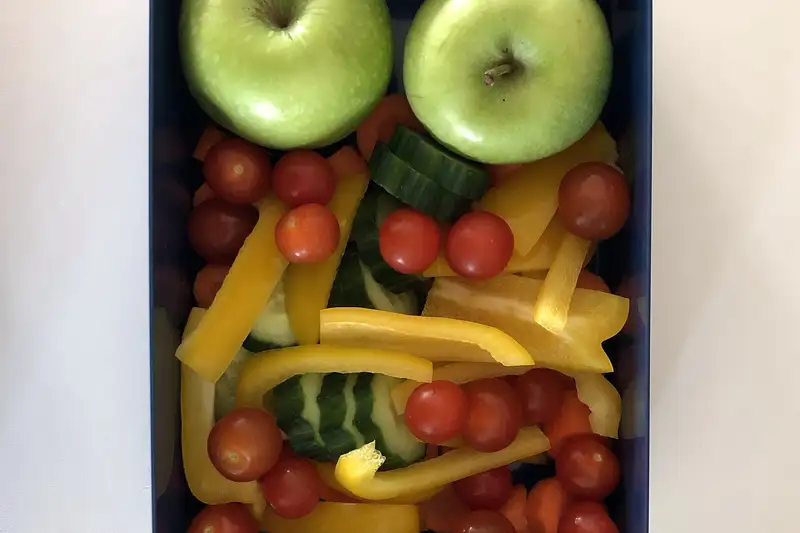
| Gluten-free wrap ✓ with plain cooked chicken and cucumber | Cherry tomatoes and pepper strips | Fresh fruit |
| Cold rice salad with sweetcorn, peas and tuna | Carrot sticks | Plain yoghurt |
| Gluten-free pasta salad ✓ with cheese and tomatoes | Apple slices | Rice cakes ✓ |
| Leftover chilli con carne with rice in a food flask | Cucumber sticks | Grapes |
| Hard-boiled egg and plain cheese | Gluten-free crackers ✓ | Dried fruit |
For more meal ideas through the week, see our 7-day gluten-free meal plan. If prescriptions for gluten-free bread have stopped in your area, our guide to what to do when prescriptions stop has tips on keeping costs down without turning to “may contain” products.
Keeping the lunchbox safe
- Pack it separately. Make gluten-free sandwiches first, on a clean board, with a separate butter or spread pot. Our guide to cross-contamination at home covers the kitchen in more detail.
- No swapping. Coeliac UK suggests making sure your child knows not to swap items in their packed lunch with friends, and encouraging them to double-check any food they’re unsure of. Tell staff too: young children often make mistakes or swap food.
- Label the box with your child’s name so it isn’t mixed up with someone else’s.
- Check the label each time you buy. Recipes change, and a gluten-free version can sit on the shelf next to a standard one that looks almost the same. In the UK, “gluten-free” on a label means no more than 20 mg/kg (20 ppm) of gluten.
Snacks, cookery lessons, parties and trips
Lunch isn’t the only time food appears at school. Coeliac UK’s school guidance suggests:
- Snack time: you may need to provide gluten-free snacks so your child doesn’t feel different. Ask staff to store them separately from foods containing gluten.
- Cookery lessons: speak to the teacher beforehand about cross-contamination, such as separate utensils and avoiding a floury work area.
- Play and crafts: play dough isn’t always gluten-free, and dried pasta used for crafts can be tempting for small children. Coeliac UK suggests gluten-free alternatives or supervision.
- Class parties: ask what’s being served so you can send similar gluten-free versions. For Halloween and party bags, our Halloween sweets guide explains what to check.
- School trips: speak to the trip leader and whoever provides the meals in advance, and pack emergency gluten-free supplies such as bread and crackers. Our guide to parties, sleepovers and school trips covers trips, residentials and bake sales in more detail.
If you feel you’re not getting the support you need, Coeliac UK suggests talking to your local dietitian, who may be able to speak to the school on your behalf.
Quick checklist for the start of term
- Meet the school and caterer: school meals or packed lunch? Ask about an individual healthcare plan.
- Share Coeliac UK’s schools pack for your nation.
- Agree how snacks, cookery, parties and trips will work.
- Stock up on gluten-free bread, wraps and crackers ✓.
- Teach the no-swapping rule.
Frequently asked questions
Does my child's school have to provide a gluten-free school meal?
Not necessarily. In England, schools must make arrangements to support pupils with medical conditions, and government guidance says schools should make reasonable adjustments for medical and dietary needs. But Coeliac UK explains that there is no obligation to provide a suitable meal. Meet the school and caterer to agree what can be done. If safe arrangements can't be made, Coeliac UK says a packed lunch is the safer option.
Can my child still get infant free school meals if they need gluten-free food?
In England, children in reception, year 1 and year 2 at government-funded schools can get free school meals. From the 2026 to 2027 school year, children in any year whose family gets Universal Credit also qualify, whatever the household income, but you still need to apply. Coeliac UK says a child who is entitled to a free school meal should not be excluded because they have coeliac disease.
What can I put in a gluten-free lunchbox?
Coeliac UK lists fresh fruit and vegetables, plain cooked meats, plain cheese, eggs, plain yoghurt, rice, plain potatoes and pulses as gluten-free. Bread, wraps, crackers and pasta need to be labelled gluten-free. Crisps, rice cakes, flavoured yoghurts, sausages and dips are 'need to check' foods, so read the label.
How do I stop my child swapping food at lunchtime?
Coeliac UK suggests making sure your child knows not to swap items in their packed lunch with friends, and encouraging them to double-check any food they're unsure of. Tell staff too, because young children often make mistakes or swap food.
Sources
- Nursery, playgroup and school, Coeliac UK. Accessed 7 October 2026.
- FAQs for education and childcare, Coeliac UK. Accessed 7 October 2026.
- Coeliac disease, schools and the law, Coeliac UK. Accessed 7 October 2026.
- Gluten free checklist (May 2024), Coeliac UK. Accessed 7 October 2026.
- Apply for free school meals, GOV.UK. Accessed 7 October 2026.
- School food in England, Department for Education (GOV.UK). Accessed 7 October 2026.
- Children and Families Act 2014, section 100, legislation.gov.uk. Accessed 7 October 2026.
- Supporting pupils with medical conditions at school, Department for Education (GOV.UK). Accessed 7 October 2026.
- Free school meals, mygov.scot. Accessed 7 October 2026.
- Universal Primary Free School Meals (UPFSM), Welsh Government. Accessed 7 October 2026.
- Nutrition and school meals, nidirect. Accessed 7 October 2026.
- Commission Implementing Regulation (EU) No 828/2014 (as retained in UK law), legislation.gov.uk. Accessed 7 October 2026.
The Coeliac Everyday newsletter
Gluten-free first: new recipes, supermarket alternatives, coeliac resources and allergy-aware ideas for UK families. Usually once or twice a month, never spam.
By signing up, you agree to receive the Coeliac Everyday newsletter by email. We'll email you a link to confirm first, and you won't be added until you click it. We use Kit to send our emails, and Kit records whether emails are opened and which links are clicked so we can see what's useful. You can unsubscribe at any time using the link in every email, or by emailing us. See our privacy policy for details.