Are Halloween sweets gluten-free? A UK guide to sweets, chocolate and party bags
Some Halloween sweets and chocolates are gluten-free and some aren't. How to read the label, which sweets aren't gluten-free, and tips for trick-or-treating.
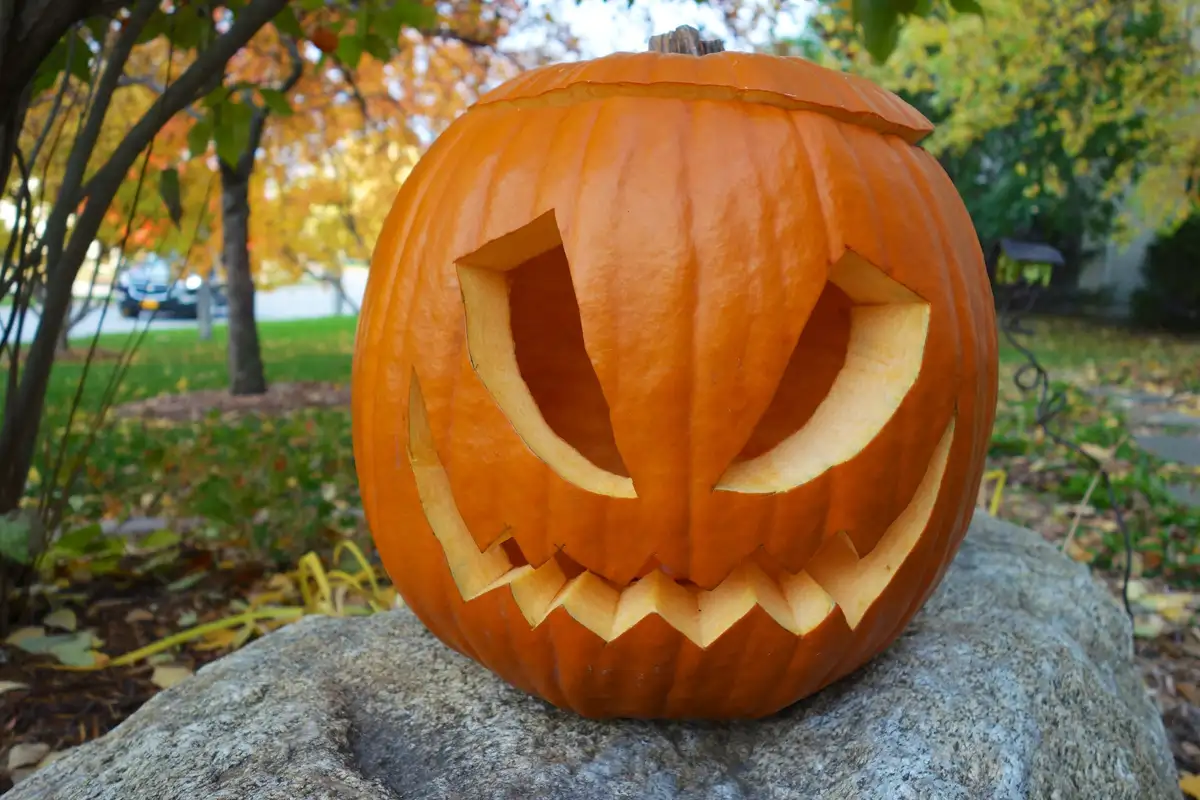
Halloween brings sweets, chocolate and party food all at once, often in bags and tubs you didn’t choose yourself. If you or your child has coeliac disease, the question comes up again and again: is this one gluten-free? Here’s how to check, which sweets need extra caution, and how to handle trick-or-treating, pick ‘n’ mix and party bags.
The short answer
Some Halloween sweets and chocolates are gluten-free and some aren’t, and the Halloween wrapper doesn’t tell you which. Coeliac UK’s gluten-free checklist puts chocolates and sweets in its “need to check” column. It lists liquorice sweets, ice cream cones and wafers as not gluten-free.
So the answer depends on the pack in your hand. Coeliac UK’s advice is to read the label every time, because recipes and manufacturing processes can change without warning. That includes seasonal and mini versions of sweets you already buy: check the one you’ve actually got.
| Treat | Coeliac UK checklist | What to look for |
|---|---|---|
| Chocolates | Check | A gluten-free claim. Otherwise wheat, barley, rye or oats in bold (watch for wafer, biscuit and barley malt extract) and any “may contain” warning |
| Sweets (jelly, gummy, chewy, fizzy, boiled, marshmallow, lollipops) | Check | As above. Glucose syrup, dextrose and wheat-based maltodextrin are fine |
| Liquorice sweets | Not gluten-free | Only if labelled gluten-free |
| Ice cream cones and wafers | Not gluten-free | Only if labelled gluten-free |
| Flavoured popcorn and crisps | Check | As for chocolates. Salt and vinegar flavours: see our malt vinegar guide |
| Cake decorations (such as sprinkles), ready-to-use icing, marzipan | Check | As for chocolates |
| Food colouring, gelatine, icing sugar | Gluten-free | Still read the label if it’s a mix with other ingredients |
How to check a Halloween sweet
- Does the pack say gluten-free? By law, “gluten-free” means the food as sold contains no more than 20 mg/kg of gluten, and Coeliac UK says that when you see gluten-free on a label, the food is suitable on a gluten-free diet.
- No claim? Read the ingredients. Cereals containing gluten must be named and emphasised in the ingredients list, for example in bold. Look for wheat, barley, rye and oats. Spelt and khorasan wheat count as wheat. Coeliac UK says that even if only a tiny amount is used, it must still be listed.
- Check for “may contain”. “May contain” statements are voluntary, so a pack without one isn’t a guarantee. If a product has no gluten-free claim and does say it may contain a cereal containing gluten, Coeliac UK’s checklist advises you not to eat it.
- Don’t be put off by glucose syrup. Coeliac UK says glucose syrup is gluten-free even when it’s made from wheat, because the processing leaves no significant gluten. It lists glucose syrup from wheat or barley (including dextrose) and wheat-based maltodextrins as safe ingredients that don’t need the cereal named.
- If you can’t tell, leave it and choose something you can check.
When “barley” and “gluten-free” are on the same pack
Some chocolates and sweets use barley malt extract as a flavouring. Barley must always be emphasised in the ingredients list, however little is used, but that doesn’t override a gluten-free claim. Coeliac UK lists barley malt extract as “need to check” and says some products containing it are suitable if they’re labelled gluten-free, because a gluten-free claim means the food as sold meets the 20 mg/kg limit. Without a gluten-free claim, NHS dietitians explain that you can’t tell from the ingredients list whether the amount is low enough, so leave it. Our malt vinegar and barley malt extract guide explains this in more detail.
You may also see “gluten-free” next to “may contain wheat”. Coeliac UK explains that Food Standards Agency guidance allows this to protect people with a wheat allergy, and that the gluten-free claim still has to be met. For coeliac disease, the gluten-free claim is what counts.
Sweets that aren’t gluten-free unless labelled
Liquorice. Coeliac UK lists liquorice sweets as not gluten-free. An NHS hospital dietetics leaflet explains that liquorice is made using liquorice root and wheat flour, so solid liquorice such as ropes and allsorts isn’t suitable. Liquorice root on its own is gluten-free, and the same leaflet says liquorice flavouring used in boiled sweets is gluten-free. That’s why a liquorice-flavoured boiled sweet can be fine while a liquorice rope isn’t. Read the label either way.
Wafers, biscuits and cones. Coeliac UK lists ice cream cones and wafers, and biscuits made from wheat, rye or barley flour, as not gluten-free. Chocolate bars with a wafer or biscuit centre fall into the same group unless they’re labelled gluten-free.
Anything “malted”. Coeliac UK’s grains guide lists malted barley products, such as malted drinks, as not gluten-free. If “malt” or “malted” is in the name, look for barley in bold and a gluten-free claim.
Multipacks, fun-size bars and treat tubs
Halloween sweets often come in multipacks of small wrapped treats, and that changes where the information is. The Food Standards Agency says that in a multipack, allergens must be displayed on the outer packaging. Individual wrappers may carry allergen information too, but they don’t have to.
That leads to some practical suggestions:
- Keep the outer bag or tub until you’ve checked it, rather than tipping the treats into a bowl straight away.
- If you’re handing out sweets, leaving them in the original tub (or keeping the outer bag nearby) means other parents can check too.
- A single wrapped sweet with no outer pack may not tell you enough. If you can’t check it, swap it.
A very small pack sold on its own, where the largest side is under 10 cm², may leave out the full ingredients list. The FSA’s technical guidance says it must still declare allergens such as wheat or barley with the word “Contains…”.
The same applies to Christmas selection boxes and tins of wrapped chocolates. Our gluten-free Christmas guide covers selection boxes alongside mince pies, Christmas pudding and stuffing.
Pick ‘n’ mix and loose sweets
Loose sweets don’t have a printed ingredients list, but you still have a right to the information. GOV.UK says food businesses must give you allergen information for any loose item that contains any of the 14 allergens, which include cereals containing gluten. They can tell you verbally, but if they do, they must let you know where to find written confirmation.
Two things are worth thinking about, as our suggestion rather than an official rule:
- Ask about each sweet, not the counter as a whole.
- Think about cross-contamination. Shared scoops, open tubs and sweets that have spilled between sections mean a sweet can come into contact with others. If the shop can’t tell you, leave it.
Trick-or-treating with a child who has coeliac disease
Trick-or-treating is the hardest part to control, because you don’t choose what goes in the bag. Some ideas that can help:
- Agree a swap before you go. Your child hands over anything you can’t check, and gets something you’ve already checked in return. It’s easier to agree at home than on the doorstep.
- Check the haul at home, in good light, using the steps above. Put anything without enough information to one side.
- Have your own checked treats ready for the swap, so going without isn’t the only option.
- Talk to the friends you’re going round with beforehand, if you’re comfortable doing so.
Coeliac UK publishes a Halloween list for 2026 of Halloween-themed sweets, chocolate and snacks, as one of its ready-made food lists to help you find suitable products. Members can search more products in Coeliac UK’s app and website. Coeliac UK still advises you to check the latest details on the product label before eating, because products can change.
Halloween parties, class parties and party bags
For parties, Coeliac UK’s advice for parents is not to expect a busy organiser to cater automatically. Talk to the parent organising it, or the venue, in advance. If they can’t cater for your child, ask what food is being prepared so you can bring similar gluten-free versions, perhaps with enough for everyone to try so your child feels included. Our school lunchbox guide covers snacks, cookery lessons and class parties at school, and our guide to parties, sleepovers and school trips covers birthday parties and stays away from home.
Homemade treats don’t come with a label at all. If you’re baking for a party, Coeliac UK’s checklist lists food colouring, gelatine and icing sugar as gluten-free, and cake decorations, ready-to-use icings and marzipan as foods to check. Our gluten-free flours guide can help with the baking itself. Coeliac UK’s advice on avoiding cross-contamination at home includes cleaning surfaces, pots, pans and utensils with hot soapy water, and our cross-contamination guide goes into more detail.
Party bags: if you’re putting sweets in party bags, leave them in their labelled packs, or include the outer pack’s details, so other parents can check them.
Quick checklist
- Does the pack say gluten-free? Suitable for coeliac disease, even if barley malt extract or “may contain wheat” is also on it. That doesn’t make it suitable for a wheat allergy: a gluten-free food can still contain gluten-free wheat starch or carry a “may contain wheat” warning.
- No claim? Look for wheat, barley, rye or oats in bold. Glucose syrup, dextrose and wheat-based maltodextrin are fine.
- “May contain” a cereal containing gluten, with no gluten-free claim? Coeliac UK advises not eating it.
- Liquorice, wafers, biscuit bars, cones or anything malted? Only if labelled gluten-free.
- Multipack treat? Check the outer bag or tub. Loose or unlabelled? Ask, and if you can’t check it, swap it.
For everyday label reading, see our guide to gluten-free labels and “may contain” warnings.
Frequently asked questions
Are Halloween sweets gluten-free?
Some are and some aren't. Coeliac UK lists chocolates and sweets as foods you need to check, and lists liquorice sweets, ice cream cones and wafers as not gluten-free. Look for a gluten-free claim on the pack. Without one, check the ingredients for wheat, barley, rye or oats in bold, and for a 'may contain' warning.
Is chocolate gluten-free?
Not always. Coeliac UK lists chocolates as a 'need to check' food. Plain chocolate may be fine, but some chocolates contain wafer, biscuit or barley malt extract. If the pack says gluten-free it's suitable, even if barley malt extract is listed. If it doesn't, check the ingredients for wheat, barley, rye or oats in bold, and for a 'may contain' warning.
Is liquorice gluten-free?
Liquorice sweets usually aren't. Coeliac UK lists liquorice sweets as not gluten-free, and NHS dietitians explain that liquorice is made using liquorice root and wheat flour. Liquorice root itself is gluten-free. Only choose liquorice sweets that are labelled gluten-free.
Are jelly sweets gluten-free?
Not automatically. Coeliac UK lists sweets as a 'need to check' food, so read the label on jelly, gummy and fizzy sweets too. Glucose syrup, dextrose and wheat-based maltodextrin are safe, according to Coeliac UK, even when they come from wheat. Look for a gluten-free claim, or check for wheat, barley, rye or oats in bold and for a 'may contain' warning.
Is pick 'n' mix gluten-free?
You can't tell by looking. Loose sweets don't come with a printed label, but the shop must give you allergen information for any loose item that contains one of the 14 allergens, including cereals containing gluten. Ask for it, and think about shared scoops and open tubs too. If they can't tell you, leave it.
What if a sweet from a multipack has no ingredients on its wrapper?
In a multipack, the allergen information must be on the outer packaging, so the individual wrappers may not show it. Keep the outer bag or tub until you've checked it. If a wrapped sweet arrives on its own and you can't check it, swap it for one you know is suitable.
Sources
- Gluten free checklist (May 2024), Coeliac UK. Accessed 8 October 2026.
- Coeliac UK Halloween list 2026, Coeliac UK. Accessed 8 October 2026.
- Ready made food lists, Coeliac UK. Accessed 8 October 2026.
- Food and drink guide, Coeliac UK. Accessed 8 October 2026.
- How to read food labels, Coeliac UK. Accessed 8 October 2026.
- Living gluten free FAQs (glucose syrup, maltodextrin, wheat starch), Coeliac UK. Accessed 8 October 2026.
- Grains: what's gluten free, what to check and what to avoid, Coeliac UK. Accessed 8 October 2026.
- Gluten free law, Coeliac UK (Coeliac Commercial). Accessed 8 October 2026.
- Nursery, playgroup and school (including parties), Coeliac UK. Accessed 8 October 2026.
- Avoid gluten free cross contamination at home, Coeliac UK. Accessed 8 October 2026.
- Coeliac disease: treatment, NHS. Accessed 8 October 2026.
- Coeliac disease: FAQs (liquorice, malt extract, isomalt), Milton Keynes University Hospital NHS Foundation Trust. Accessed 8 October 2026.
- Gluten-free labelling for coeliac disease (barley malt extract), Cambridge University Hospitals NHS Foundation Trust. Accessed 8 October 2026.
- Understanding food labelling: allergen labelling, GOV.UK. Accessed 8 October 2026.
- Food labelling and packaging: precautionary allergen labelling (PAL), GOV.UK. Accessed 8 October 2026.
- Allergen labelling for food manufacturers (multi-packs), Food Standards Agency (GOV.UK). Accessed 8 October 2026.
- Food allergen labelling and information requirements: technical guidance, Food Standards Agency (GOV.UK). Accessed 8 October 2026.
- Regulation (EU) No 1169/2011, Annex II: substances or products causing allergies or intolerances (as it applies in UK law), legislation.gov.uk. Accessed 8 October 2026.
- Regulation (EU) No 1169/2011, Article 21: labelling of substances causing allergies or intolerances (as it applies in UK law), legislation.gov.uk. Accessed 8 October 2026.
- Regulation (EU) No 828/2014, Annex: gluten-free and very low gluten statements (as it applies in UK law), legislation.gov.uk. Accessed 8 October 2026.
The Coeliac Everyday newsletter
Gluten-free first: new recipes, supermarket alternatives, coeliac resources and allergy-aware ideas for UK families. Usually once or twice a month, never spam.
By signing up, you agree to receive the Coeliac Everyday newsletter by email. We'll email you a link to confirm first, and you won't be added until you click it. We use Kit to send our emails, and Kit records whether emails are opened and which links are clicked so we can see what's useful. You can unsubscribe at any time using the link in every email, or by emailing us. See our privacy policy for details.