Gluten-free Christmas: a planning guide for hosts and guests
Plan a gluten-free Christmas: what's naturally gluten-free, what to check on stuffing, mince pies, pudding and selection boxes, and avoiding cross-contamination.
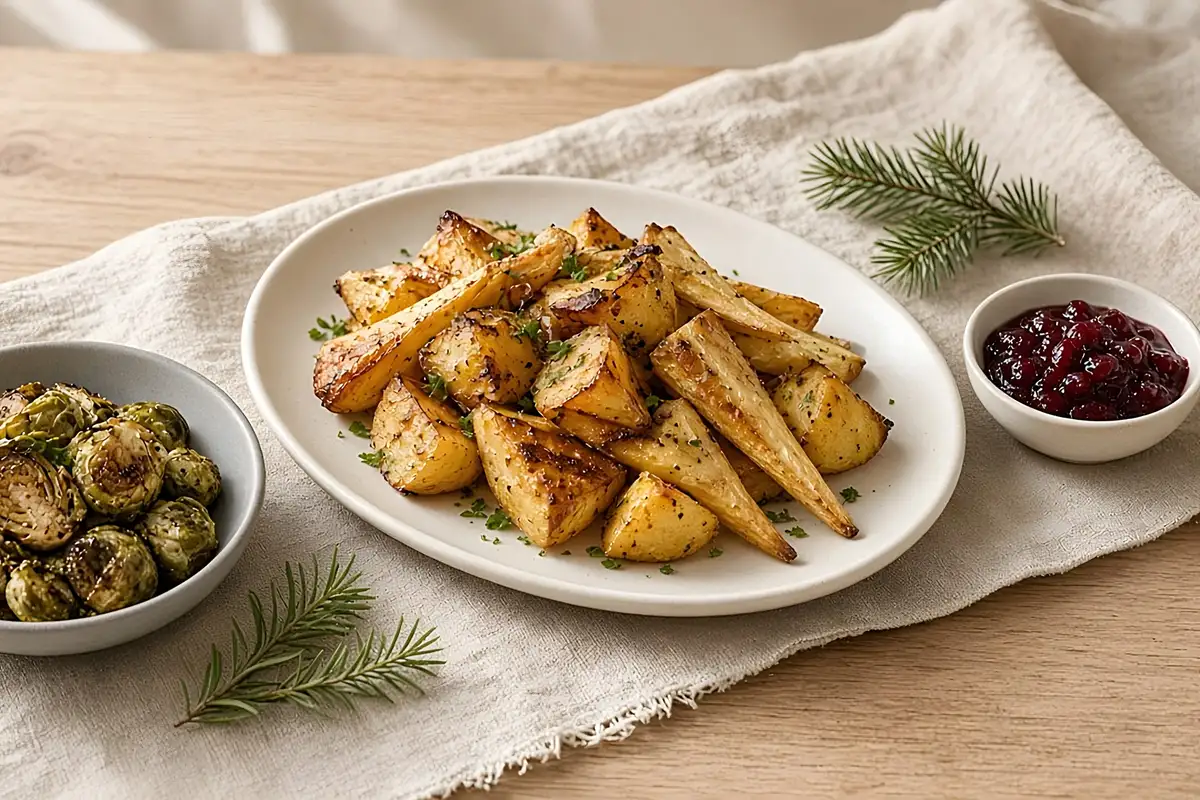
Christmas dinner is mostly roast meat, potatoes and vegetables, so a gluten-free version is very achievable. The risks are in the extras (stuffing, gravy, sausages, sauces and puddings: the NHS lists gravies, sauces, pastries and cakes among foods that contain gluten unless they’re gluten-free versions) and in a busy kitchen where crumbs get everywhere. This guide helps you plan, whether you’re hosting someone with coeliac disease or you’re the coeliac guest, and explains what to check on stuffing, mince pies, Christmas pudding and selection boxes.
The Christmas table at a glance
This is based on Coeliac UK’s gluten-free checklist. “Check” means the food is sometimes gluten-free and sometimes not, so read the label or choose a version labelled gluten-free.
| Food | Gluten status |
|---|---|
| Plain turkey, beef, ham, salmon and other fresh meat or fish | Naturally gluten-free |
| Plain potatoes, parsnips, sprouts, carrots and other vegetables | Naturally gluten-free |
| Butter, oil, goose fat or other plain fats for roasting | Naturally gluten-free |
| Mint sauce | Gluten-free |
| Cranberry sauce and other jarred sauces | Check |
| Pickled onions, pickles and chutneys | Check (vegetables pickled in spirit vinegar are gluten-free; ones in barley malt vinegar need checking) |
| Crisps and flavoured popcorn | Check |
| Sausages and pigs in blankets (how to check) | Check (some sausages contain gluten-containing cereals) |
| Gravy granules, stock cubes, seasoning mixes (how to check) | Check |
| Ready-to-roast potatoes and frozen sides | Check |
| Stuffing mix and breadcrumbs (what to check) | Contain gluten unless labelled gluten-free |
| Bread sauce, Yorkshire puddings (how to check), pastry | Contain gluten unless made with gluten-free bread or flour |
| Christmas pudding, mince pies, Christmas cake (mince pies, pudding and cake) | Contain gluten when made with wheat flour or breadcrumbs; buy versions labelled gluten-free or make your own with gluten-free ingredients |
| Mincemeat, suet, marzipan, icing and cake decorations | Check |
| Chocolates, sweets and selection boxes (what to check) | Check (wafers and wheat-flour biscuits are not gluten-free unless labelled) |
| Beer, lager, ale and stout | Contain gluten (choose beers labelled gluten-free) |
| Wine, cider, spirits, port, sherry and liqueurs | Gluten-free |
Coeliac UK also advises that if a product without a gluten-free claim has a “may contain” warning for gluten-containing cereals, you shouldn’t eat it. Our guide to UK allergen labels and “may contain” warnings explains how to read labels quickly.
A “gluten-free” claim on a UK label is regulated. Coeliac UK’s guide to the law explains that a food can only be labelled gluten-free if it contains no more than 20 parts per million of gluten. That’s why the gluten-free label is the simplest thing to look for on festive foods that would normally contain gluten. A gluten-free claim isn’t the same as an independent certification scheme, though, and recipes change, so check the label each year rather than relying on last Christmas’s packet.
Stuffing
Ordinary stuffing contains gluten. Coeliac UK’s checklist lists stuffing mix and breadcrumbs as not gluten-free, so a standard packet mix or a homemade stuffing made with ordinary bread is out.
Your options:
- Buy a stuffing labelled gluten-free. Read the whole label, including any sausage meat or “stuffing balls” in the same pack.
- Make your own with gluten-free breadcrumbs. In a Coeliac UK Christmas Q&A, gluten-free author and blogger Laura Strange suggests gluten-free breadcrumbs or a ready-made gluten-free stuffing.
- Check every other ingredient. Sausage meat is a “need to check” food (our sausages guide explains why), and so are stock cubes and blended seasonings. Plain onions, herbs, chestnuts, dried fruit and butter are naturally gluten-free.
Cook the stuffing in its own dish. The Food Standards Agency’s Christmas food hygiene advice is to cook stuffing in a separate roasting tin, not inside the turkey, because a stuffed bird takes longer to cook and may not cook through. A separate tin also keeps a gluten-free stuffing away from anything that isn’t.
Mince pies
Ordinary mince pies contain gluten because the pastry is made with wheat flour. The NHS lists pies, cakes and pastries among the foods people with coeliac disease shouldn’t eat unless they’re gluten-free versions.
- Shop-bought: choose mince pies labelled gluten-free. If you want to buy early, check the pack to see whether they can be frozen.
- Homemade: use a gluten-free pastry (our flours guide explains the main gluten-free flour blends) and check the mincemeat. Coeliac UK lists mincemeat as a food you need to check, so read its label even if the pastry is gluten-free.
- Suet: Coeliac UK also lists suet as a food to check. Packaged shredded suet can contain flour: when we checked the maker’s page for one widely sold shredded beef suet on 22 October 2026, wheat flour was its second ingredient. Look for wheat in bold, or choose a suet labelled gluten-free.
Don’t forget the toppings. Coeliac UK lists marzipan, ready-to-use icings and cake decorations as foods to check, and icing sugar as gluten-free.
Christmas pudding and Christmas cake
A traditional Christmas pudding or Christmas cake contains gluten unless it’s labelled gluten-free. Coeliac UK’s checklist lists puddings made using wheat flour, cakes made from wheat, rye or barley flour and breadcrumbs as not gluten-free. Many traditional recipes add suet and beer too: a classic BBC Food Christmas pudding recipe, for example, uses breadcrumbs, shredded suet and stout.
When you read a pudding or cake label, or a recipe, look for:
- wheat flour or breadcrumbs: not gluten-free unless they’re gluten-free versions
- suet and mincemeat: need checking, as above
- beer, ale or stout: Coeliac UK lists ordinary beers, ales and stouts as not gluten-free. Spirits such as brandy and rum, and wine, port and sherry, are on its gluten-free list.
- “may contain” warnings for wheat, barley, rye or oats on a pudding without a gluten-free claim
If you’re making your own, gluten-free breadcrumbs or a gluten-free flour blend can replace the ordinary ones, alongside a suet labelled gluten-free. Shop-bought custard, brandy butter and dessert sauces are prepared foods, so check those labels too.
Selection boxes and Christmas chocolates
Chocolate is one of the foods Coeliac UK lists as need to check. Plain chocolate may be fine, but bars with a wafer or biscuit centre, or malted ingredients, can contain gluten. Coeliac UK lists wafers and biscuits made from wheat, rye or barley flour as not gluten-free.
A selection box is several different products in one box, so treat each bar separately:
- Read the outer box. The Food Standards Agency says that for products sold in multi-packs, allergens must be shown on the outer packaging. The individual wrappers may not tell you enough, so keep the box until you’ve checked it.
- Look for a gluten-free claim on the box. Without one, look for wheat, barley, rye or oats in bold for each item, and any “may contain” warning.
- Watch for barley malt extract. It’s fine in a product labelled gluten-free, but without that claim you can’t tell from the ingredients whether the amount is low enough. Our malt vinegar and barley malt extract guide explains why.
- Tins and tubs of wrapped chocolates work the same way: check the outer tin or tub, not the individual wrappers.
Our Halloween sweets guide goes through chocolate and sweet labels in more detail, including multipacks, glucose syrup and pick ‘n’ mix, and all of it applies at Christmas too. If you’re buying a selection box as a present for someone with coeliac disease, keeping the outer box (or a photo of the ingredients) lets them check it themselves.
Hosting: make the whole meal gluten-free if you can
The simplest approach is to make everything on the main table gluten-free. Then nobody has to remember which gravy is which, and there’s no risk of a stray spoon.
- Plan the menu early. Write down every component, including gravy, stuffing, sauces, sides and desserts. Mark anything you’ll buy rather than make.
- Make simple swaps:
- gravy thickened with cornflour (cornflour is listed as gluten-free by Coeliac UK) and a stock labelled gluten-free
- stuffing made with gluten-free breadcrumbs, or a stuffing mix labelled gluten-free (more on stuffing)
- sausages and pigs in blankets labelled gluten-free
- Yorkshire puddings made with a gluten-free plain flour
- roast potatoes made from plain potatoes, rather than ready-to-roast ones (unless the label is clear)
- Shop with a list and read every label. Recipes change, so check even products you’ve bought before. Keep the packaging so your guest can double-check if they want to.
- Order gluten-free puddings and mince pies early, so you’re not hunting for them on Christmas Eve. Coeliac UK’s Christmas pages link to gluten-free Christmas recipes and a list of gluten-free Christmas food.
- Cook the stuffing separately, in its own tin rather than inside the bird, as the Food Standards Agency advises. That also keeps it away from anything that isn’t gluten-free. Follow the FSA’s cooking your food guidance for poultry: cook it until it’s steaming hot throughout, with no pink meat and clear juices.
Avoiding cross-contamination in a busy kitchen
Even a gluten-free dish stops being gluten-free if it picks up crumbs. Coeliac UK’s cross-contamination advice includes:
- wiping down surfaces and washing pots, pans and utensils in hot soapy water (standard washing-up liquid or a dishwasher removes gluten)
- using clean oil or a separate fryer for gluten-free food
- using separate condiments, or clean cutlery for shared butter and spreads
- keeping separate bread boards, and using toaster bags or a separate toaster
At Christmas, also watch out for:
- Roasting tins: don’t roast gluten-free potatoes in a tin with ordinary stuffing or sausages, or in fat that has been used for them.
- Serving spoons: give every dish its own spoon, and keep gluten-free dishes at one end of the table, served first.
- Gravy: if you do make two gravies, label them clearly and keep the ladles separate.
- Buffets and nibbles: crisps, nuts and dips quickly get contaminated by crackers and breadsticks. Put out separate bowls for gluten-free snacks.
Our full guide to avoiding cross-contamination at home has more practical tips.
Being a coeliac guest
- Talk to your host early. Explain that it’s about crumbs and shared utensils as well as ingredients. Offer to send them this guide.
- Offer to bring something. A gluten-free stuffing, gravy or dessert takes pressure off your host and means there’s at least one dish you know you can eat.
- Ask for packaging. It’s fine to ask your host to keep labels so you can check them.
- Serve yourself first, before serving spoons get mixed up.
- Christmas meals out: contact the venue ahead of time and ask how they prevent cross-contamination. Our guide to eating out safely in the UK explains what restaurants must tell you about allergens.
Drinks
Coeliac UK’s checklist lists wine, cider, spirits, port, sherry and liqueurs as gluten-free, while ordinary beers, lagers, ales and stouts contain gluten. If beer is part of your Christmas, see our guide to gluten-free beer in the UK.
If gluten slips through
Accidents happen. The NHS explains that even a small amount of gluten can cause unpleasant symptoms for people with coeliac disease. If you’re worried about symptoms, contact your GP or NHS 111. Then go back to your normal gluten-free diet.
Looking for festive-friendly dishes? Our vegan lentil cottage pie makes a good make-ahead main for mixed-diet gatherings, and our leek and potato soup works as a starter.
Frequently asked questions
Is Christmas dinner gluten-free?
Much of it can be. Plain roast turkey, plain vegetables and roast potatoes made with plain potatoes and oil are naturally gluten-free. Stuffing, gravy, pigs in blankets, bread sauce, Yorkshire puddings, Christmas pudding and mince pies usually contain gluten unless you buy or make gluten-free versions.
Is stuffing gluten-free?
Not usually. Coeliac UK lists stuffing mix and breadcrumbs as not gluten-free, so ordinary stuffing contains gluten. Use a stuffing labelled gluten-free, or make your own with gluten-free breadcrumbs and check every other ingredient, including any sausage meat.
Are mince pies gluten-free?
Ordinary mince pies aren't, because the pastry is made with wheat flour. Choose mince pies labelled gluten-free. If you make your own, use a gluten-free pastry and check the mincemeat label, because Coeliac UK lists mincemeat and suet as foods you need to check.
Is Christmas pudding gluten-free?
Not usually. Coeliac UK lists puddings made with wheat flour, and breadcrumbs, as not gluten-free, and many traditional recipes also use suet and beer or stout. Buy a Christmas pudding labelled gluten-free, or make one with gluten-free breadcrumbs or flour, a suet labelled gluten-free and no ordinary beer or stout.
Are selection boxes gluten-free?
Some are and some aren't. Coeliac UK lists chocolates as a food to check, and wafers and wheat-flour biscuits as not gluten-free. Check the outer box: the Food Standards Agency says allergens in a multipack must be shown on the outer packaging. Look for a gluten-free claim, or wheat, barley, rye or oats in bold and any 'may contain' warning.
Are pigs in blankets gluten-free?
Not always. Coeliac UK lists sausages as a food you need to check, because some contain gluten-containing cereals. Choose sausages labelled gluten-free, or check the ingredients for wheat, barley or rye, and check the bacon label too.
Is gravy gluten-free?
The NHS lists gravies and sauces among foods that contain gluten unless they are gluten-free versions, and Coeliac UK lists gravy granules and stock cubes as foods to check. Use gravy granules or stock labelled gluten-free, or thicken your own gravy with cornflour.
What Christmas drinks are gluten-free?
Coeliac UK lists cider, wine, spirits, port, sherry, liqueurs and gluten-free beers as suitable. Ordinary beers, lagers, ales and stouts contain gluten.
Sources
- Gluten free checklist (PDF, May 2024), Coeliac UK. Accessed 22 October 2026.
- Cross contamination, Coeliac UK. Accessed 22 October 2026.
- Gluten free Christmas, Coeliac UK. Accessed 22 October 2026.
- Coeliac disease: treatment, NHS. Accessed 22 October 2026.
- Cooking your food, GOV.UK (Food Standards Agency). Accessed 22 October 2026.
- How to read food labels, Coeliac UK. Accessed 22 October 2026.
- Christmas food hygiene, GOV.UK (Food Standards Agency). Accessed 22 October 2026.
- Allergen labelling for food manufacturers (multi-packs), GOV.UK (Food Standards Agency). Accessed 22 October 2026.
- Gluten free and the law, Coeliac UK. Accessed 22 October 2026.
- How to make Christmas pudding (Sophie Grigson), BBC Food. Accessed 22 October 2026.
- A happy, healthy, gluten free Christmas with Laura Strange (27 February 2025), Coeliac UK. Accessed 22 October 2026.
The Coeliac Everyday newsletter
Gluten-free first: new recipes, supermarket alternatives, coeliac resources and allergy-aware ideas for UK families. Usually once or twice a month, never spam.
By signing up, you agree to receive the Coeliac Everyday newsletter by email. We'll email you a link to confirm first, and you won't be added until you click it. We use Kit to send our emails, and Kit records whether emails are opened and which links are clicked so we can see what's useful. You can unsubscribe at any time using the link in every email, or by emailing us. See our privacy policy for details.